
Why 5754 aluminum sheet is used in tank trucks
5754 aluminum sheet is an Al-Mg alloy widely used in road transport equipment because it combines moderate strength, good corrosion resistance, reliable weldability, and stable forming performance. For tank trucks and special vehicles, these properties matter because the tank shell, baffles, bulkheads, side guards, cabinets, and platforms must handle vibration, liquid movement, weather, road salt, and long service cycles.
Compared with carbon steel, aluminum helps reduce tare weight. A lighter tank truck can improve payload efficiency, fuel economy, or vehicle range in electric chassis applications. 5754 is not the strongest tank material, but it is practical for non-pressure or low-stress structures where formability and corrosion resistance are important. For higher-strength tank shells or demanding cargo, engineers often compare it with 5083 aluminum plate, while 5454 is also common when better performance at moderately elevated temperature is required.
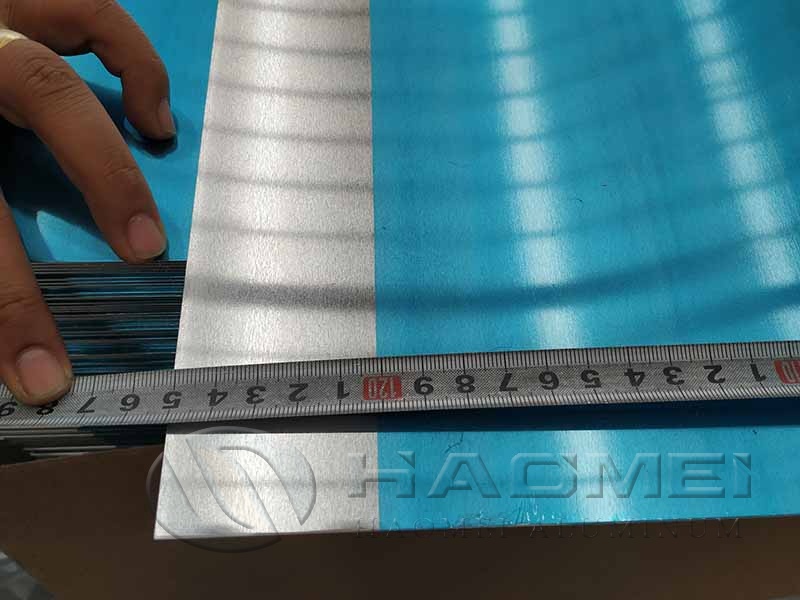
In real production, 5754 aluminum sheet is often selected for fuel tanker parts, water tankers, sanitation vehicles, service trucks, truck bodies, and auxiliary structures. The final choice depends on tank design, cargo type, welding process, plate thickness, local transport rules, and the fabricator's forming capability.
| Item | 5754 aluminum sheet performance for tank trucks |
|---|---|
| Alloy family | 5xxx series, aluminum-magnesium, non-heat-treatable |
| Main advantage | Corrosion resistance, weldability, formability, weight reduction |
| Typical parts | Shells for selected designs, baffles, partitions, fenders, toolboxes, side panels |
| Common tempers | O, H111, H22, H24, H32, H34, depending on forming and strength needs |
| Joining method | MIG welding, TIG welding, riveting, bolting, adhesive bonding for non-structural parts |
| Surface options | Mill finish, brushed, coated, embossed, protective film |
Alloy properties, tempers, and standards to check
5754 aluminum sheet is defined by recognized aluminum standards such as EN 573 for chemical composition and EN 485 for sheet and plate requirements in Europe. ASTM B209 is commonly used for aluminum sheet and plate in international trade. In China, GB/T 3880 is often referenced. These standards do not replace vehicle tank design rules; they support material identification, dimensions, tolerances, and mechanical verification.
The typical chemical composition of 5754 includes magnesium as the main alloying element. Magnesium improves corrosion resistance and strength without making the alloy difficult to weld. The table below gives commonly referenced composition ranges. Exact acceptance should follow the contract standard and mill test certificate.
| Element | Typical content range, % |
|---|---|
| Mg | 2.6-3.6 |
| Mn | Up to 0.50 |
| Cr | Up to 0.30 |
| Fe | Up to 0.40 |
| Si | Up to 0.40 |
| Cu | Up to 0.10 |
| Zn | Up to 0.20 |
| Ti | Up to 0.15 |
| Al | Balance |
Temper selection is one of the most important purchasing decisions. O temper has the best formability but lower strength. H111 is slightly strain-hardened and suitable for many formed parts. H22 and H24 provide higher strength, but bending radius and forming sequence must be controlled to avoid cracking.
| Temper | Practical meaning | Typical use in special vehicles |
|---|---|---|
| O | Annealed, soft, easy to form | Deep forming, complex covers, low-stress panels |
| H111 | Light strain hardening | Curved tank parts, baffles, formed panels |
| H22 | Quarter-hard, partly annealed | Panels needing strength and moderate forming |
| H24 | Half-hard, partly annealed | Flat or gently formed parts requiring higher strength |
| H32/H34 | Stabilized strain-hardened tempers | Components needing better dimensional stability |
For tank trucks carrying dangerous goods, the aluminum grade alone is not enough. The finished vehicle may need to comply with ADR and EN 13094 in Europe, DOT cargo tank rules in the United States, or other national regulations. These rules can cover design stress, welding qualification, inspection, pressure testing, labeling, and maintenance. Always match material documents with the tank designer's approved drawing and the applicable code.
How to purchase 5754 aluminum sheet for tankers and special vehicles
A strong purchase specification should describe the application instead of only asking for a low price per ton. For example, a shell plate and a toolbox panel may both use 5754, but the required temper, flatness, thickness tolerance, surface quality, and packaging can be different. When comparing offers, purchasing teams should request the alloy, temper, standard, thickness, width, length, quantity, surface finish, edge condition, and certificate type in writing.

Thickness selection depends on tank design and load analysis. Common ranges for vehicle use may include 2.0-8.0 mm, with thicker plate used where stiffness, welding allowance, or impact resistance is needed. Thin sheet saves weight, but it can increase deformation during welding and service. A professional tank designer should confirm wall thickness, reinforcement spacing, and joint layout.
When checking a quotation, do not focus only on the alloy name. Review the items below before approving production:
| Purchasing item | What to verify |
|---|---|
| Mill test certificate | Alloy, temper, heat number, mechanical properties, chemistry, standard |
| Dimensions | Thickness tolerance, width, length, diagonal tolerance, flatness |
| Surface | No severe scratches, oil stains, corrosion marks, dents, or roll marks beyond agreed limits |
| Weldability | Stable composition, proper temper, clean surface, compatible filler wire selection |
| Forming performance | Bend radius, elongation, grain direction, trial bending when needed |
| Packaging | Waterproof wrapping, wooden pallets, edge protection, anti-rub separation |
| Traceability | Plate marking, bundle label, batch number, certificate matching |
For fleets that require stronger tank shells, it is common to evaluate 5754 together with 5754 aluminum plate in thicker specifications and compare it with 5083, 5182, or 5454. 5754 usually has better formability than higher-magnesium 5083, but 5083 normally offers higher strength. 5454 can be preferred where service temperature is higher than ordinary ambient conditions. The right material is the one that satisfies code, fabrication, cargo compatibility, and lifecycle cost at the same time.
Cost is affected by aluminum ingot price, magnesium content, rolling thickness, order quantity, width, temper, surface treatment, certification requirements, and freight. Wide plate, tight tolerance, and urgent delivery usually raise the unit cost. In a rising aluminum market, many manufacturers shorten quotation validity. In a falling market, stock risk and delivery planning become important. Long-term supply agreements can help stabilize availability for repeat tank truck production.
Storage and handling also influence final quality. Keep 5754 sheets in a dry warehouse, avoid direct contact with wet floors, and allow packed metal to reach room temperature before opening in humid environments. During fabrication, remove protective film before welding, clean oil from joint areas, and use qualified welding procedures. For visible vehicle panels, keep the rolling direction consistent to reduce color difference after brushing or coating.
A reliable supplier should understand tanker fabrication, not just general aluminum trading. Ask whether the mill can provide stable batches, export packaging, third-party inspection support, and dimensional consistency for automated cutting. For repeat orders, sample approval and a retained reference plate help maintain consistent bending, welding, and surface appearance from one batch to the next.