
Aluminum 5059 is increasingly discussed when tank truck fabricators need higher strength, corrosion resistance, and lower empty vehicle weight. However, it is not automatically the best substitute for every conventional tanker alloy. For petroleum, chemical, and bulk-liquid tank projects, alloy selection must balance forming behavior, weld-zone performance, corrosion exposure, plate availability, and local vehicle regulations.
The questions below are written as common current search-style queries rather than verbatim quotations. The answers are independently prepared for new sourcing teams evaluating aluminum tanker plate.
1. Can Aluminum 5059 Replace 5083 or 5454 for an Aluminum Tank Truck?
In some designs, Aluminum 5059 can replace 5083 or 5454, but the substitution should not be made only because 5059 has higher strength. Aluminum 5059 is a high-magnesium alloy with strong mechanical properties and good marine-atmosphere corrosion resistance. These traits can be attractive for tanker shells, end caps, bulkheads, and structural reinforcement areas.
For a road tanker shell, however, the selected alloy must also tolerate rolling, pressing, circumferential welding, longitudinal welding, and repeated vibration during service. A plate with higher strength may require more careful forming control, particularly around tight-radius heads and complex compartment parts.
| Alloy | Typical Tanker Use Position | Relative Formability | Strength Potential | Common Selection Reason |
|---|---|---|---|---|
| 5059 | High-strength shell or structural applications | Moderate | High | Weight reduction and strength margin |
| 5083 | Tank shells, marine and chemical equipment | Good | High | Proven weldability and corrosion resistance |
| 5454 | Fuel tanker shells and formed components | Very good | Medium | Stable fabrication behavior and economical supply |
Where forming complexity is high, 5454 aluminum plate may remain a practical option. Where strength and corrosion resistance are more critical than easy deep forming, 5059 deserves engineering review.
2. What Temper of Aluminum 5059 Is Suitable for Tanker Plate Fabrication?
Temper selection depends on whether the plate will be heavily formed, lightly rolled, or used as a relatively flat structural component. Tanker manufacturers commonly assess H temper material because strain-hardened tempers provide useful strength while retaining workable ductility.
A softer temper can reduce the risk of edge cracking during head forming or severe bending. A harder temper can improve dent resistance and allow a design team to examine whether thickness can be optimized. Yet thinner material is not always preferable. Tank shell stiffness, slosh loads, baffle layout, welding distortion, and transport regulations can establish a practical minimum thickness regardless of alloy strength.
Ask the plate supplier to state the exact temper on the mill test certificate, rather than accepting a general description such as "high-strength 5059." The certificate should identify the alloy standard, temper, thickness, tensile strength, yield strength, elongation, and heat or batch traceability.
3. Does Aluminum 5059 Have Welding or Cracking Risks in Tank Truck Production?
Aluminum 5059 can be welded successfully, but welding procedure qualification is essential. Like other high-magnesium aluminum alloys, its heat-affected zone can lose part of the base-metal strain-hardening strength. This means engineers should evaluate welded-joint properties rather than relying only on unwelded plate data.
Potential fabrication issues include excessive heat input, poor cleaning, unsuitable filler selection, porosity from moisture or contamination, and distortion along long shell seams. These concerns are manageable when the fabricator uses qualified MIG or TIG procedures, clean joint preparation, controlled welding sequence, and appropriate filler metal chosen for the service medium and corrosion conditions.
For tankers carrying aggressive chemicals, the weld area deserves the same corrosion evaluation as the parent plate. A sound weld bead is not enough if crevices, contamination, or incompatible attachments can create localized corrosion sites. When comparing candidates, 5083 aluminum plate is often used as a benchmark because its welding behavior is widely familiar in aluminum fabrication.
4. Will Aluminum 5059 Reduce Tanker Weight Without Reducing Safety?
Potentially, yes, but weight reduction must come from validated engineering rather than simply choosing a stronger alloy. Aluminum is already much lighter than carbon steel, and 5059 may provide additional design flexibility because of its higher strength level. That flexibility can be used for selected components, such as shell courses, reinforcements, bulkheads, or structural sections.
A lighter tank truck can support a higher legal payload where axle limits and regional vehicle rules permit it. Still, tanker safety depends on more than plate thickness. The design must account for internal pressure or vacuum conditions, liquid surge, rollover forces, fatigue at welded seams, support saddle loading, and damage resistance during operation.
| Evaluation Item | Why It Matters for 5059 Tanker Plate |
|---|---|
| Shell thickness | Controls stiffness, impact resistance, and weld distortion behavior |
| Compartment layout | Changes slosh forces and bulkhead loading |
| Plate width and length | Can reduce weld count and material waste |
| Surface quality | Affects forming appearance and cleaning before welding |
| Fatigue assessment | Important for repeated road vibration and loaded travel cycles |
A responsible thickness decision should be supported by tank drawings, loading cases, applicable transport standards, and qualified fabrication records.
5. What Documents Should Be Requested Before Ordering Aluminum 5059 Tanker Plate?
For tanker manufacturing, a quotation alone is not enough. Request technical records that confirm the delivered plate matches the approved design and is suitable for fabrication. This is especially important for 5059 because availability, temper range, and dimensional capability can vary between mills.
Request the following with the order specification:
- Mill test certificate, preferably EN 10204 3.1 where project requirements call for it.
- Chemical composition results confirming Aluminum 5059 grade compliance.
- Mechanical-property results for the stated thickness and temper.
- Dimensional tolerances for thickness, width, length, flatness, and edge condition.
- Surface inspection requirements, including acceptable scratches, pits, oxide marks, and handling damage.
- Ultrasonic testing requirements when the tank design, pressure service, or customer specification requires internal-defect screening.
- Traceability marking that connects each plate or cut piece to its production batch.
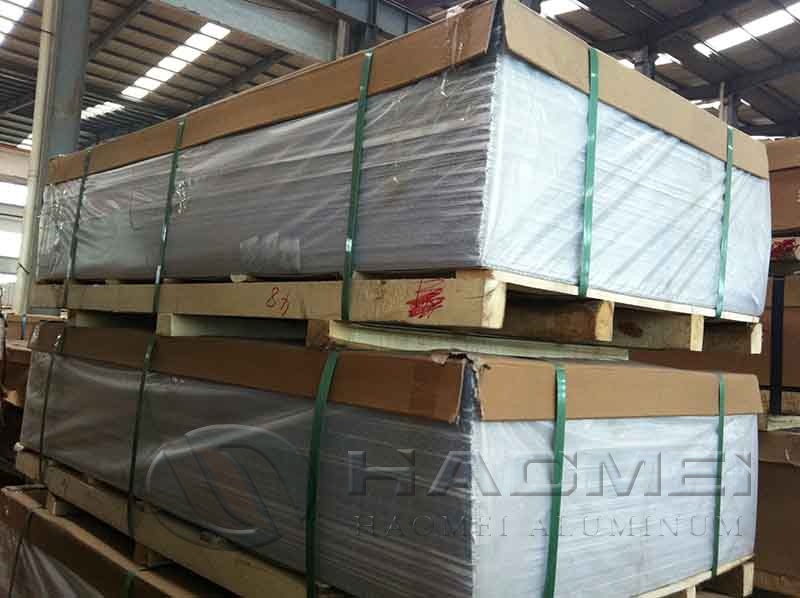
- Confirmation of plate condition for welding and forming, including protective packaging for transport and storage.
For large tank truck programs, it is also sensible to request a sample plate for forming and welding trials before approving full production material. This allows the fabrication team to confirm bend performance, welding parameters, bead appearance, distortion control, and finished-tank surface quality under actual workshop conditions.