
Fabricators of fuel tankers, chemical tank trucks, and liquid transport trailers often compare several aluminum grades before requesting quotations. Recent online discussions around 5454 aluminum sheet price commonly focus on whether the alloy is suitable for tanker shells, why quotations differ between mills, and how thickness affects material cost.
The questions below reflect current market-style inquiries from English-language search and Q&A discussions. Answers focus on practical procurement and fabrication factors rather than offering a one-size-fits-all price.
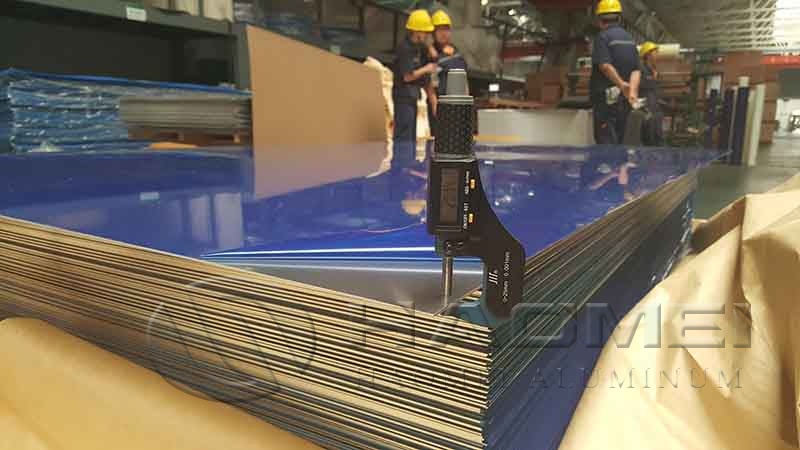
| Question Topic | What Usually Changes the Quotation | Tanker Manufacturing Impact |
|---|---|---|
| Price per ton or sheet | LME aluminum value, regional premium, processing cost | Changes project budgeting |
| Thickness selection | Weight, forming requirement, shell design | Affects payload and tank rigidity |
| Temper selection | H32, H34, O temper availability | Influences bending and welding behavior |
| Minimum order quantity | Stock size, custom width, mill rolling schedule | Affects delivery planning |
| Certification | Chemical composition, mechanical data, inspection documents | Supports vehicle quality control |
1. Why Is the 5454 Aluminum Sheet Price Higher Than Some Other Aluminum Grades?
5454 aluminum sheet price is usually influenced by the alloy's magnesium content, rolling condition, thickness tolerance, surface quality, and the order volume. It is not accurate to compare a 5454 tanker sheet quotation only with a general-purpose aluminum sheet price. Tanker-grade material normally requires tighter flatness, stable mechanical properties, and a surface suitable for forming, welding, and transport service.
In many cases, 5454 is compared with 5052, 5754, and 5083 aluminum. A lower initial material price may not produce a lower finished tank cost if the sheet creates extra forming loss, welding distortion, or inconsistent panel matching. For tank truck shell production, material consistency across multiple sheets can be as important as the quoted price per kilogram.
A complete quotation should state alloy, temper, thickness, width, length, unit weight, tolerances, coating or protective film requirements, and packaging method. Without these details, two prices that appear similar may represent very different products.
For projects requiring alternative high-strength marine and transport grades, 5083 aluminum plate is often evaluated alongside 5454 for demanding tank body sections.
2. What Thickness of 5454 Aluminum Sheet Is Used for an Aluminum Tank Truck?
There is no single thickness for every aluminum tank truck. Shell thickness depends on tank diameter, compartment layout, liquid density, internal pressure, vehicle regulations, reinforcement design, and the fabricator's engineering standard. Common tanker plate dimensions may range from medium-gauge sheet for certain components to heavier plate for cylindrical shells, heads, baffles, and structural transition areas.
The least expensive thickness is not always the most economical choice. Using a sheet that is too thin may require additional stiffeners, create forming difficulties, or increase the risk of deformation during welding and road operation. A thicker sheet raises material cost and vehicle weight, which can reduce legal payload capacity.
Fabricators should evaluate thickness using the complete tank design rather than selecting material from a price list. The calculation should include corrosion allowance, weld joint arrangement, compartment spacing, rollover protection design, and the liquid carried by the tank.
3. Is 5454 Aluminum Plate Better Than 5754 for Tanker Manufacturing?
This question appears frequently because both 5454 and 5754 are aluminum-magnesium alloys with good corrosion resistance and weldability. The better option depends on the tanker design, forming route, required strength level, material availability, and local fabrication practice.
5454 is widely recognized for transportation-related applications where corrosion resistance and stable performance are important. It can be a practical selection for tanker panels and formed components when the specified temper supports the production method. 5754 may also be selected where good formability and broad market availability are priorities.
Instead of asking which alloy is universally better, fabricators should ask which alloy and temper match the drawing requirements. Request tensile strength, yield strength, elongation, chemical composition, grain structure expectations, and bend test requirements from the supplier. For comparison projects, 5754 aluminum plate can be reviewed against 5454 based on the actual shell and component drawings.
4. How Can I Get an Accurate 5454 Aluminum Sheet Price Instead of a Rough Estimate?
An accurate quotation begins with a clear material request. State the alloy as 5454, specify the temper, and provide exact thickness, width, and length. If the sheet will be rolled into a tanker shell, mention the bend radius, rolling direction preference, and surface condition needed for fabrication.
Also identify whether the material is required as sheet, plate, coil, or cut-to-length panels. A mill may price a standard stock size differently from a non-standard width or extra-long panel. Freight can be significant for wide tanker sheets because packaging, container loading, inland transportation, and handling equipment may differ from ordinary aluminum products.
Useful quotation details include:
Alloy and temper, such as 5454-H32 or another specified condition.
Thickness tolerance and width tolerance.
Required sheet dimensions and total tonnage.
Number of delivery batches.
Mill test certificate and inspection document requirements.
Surface protection, paper interleaving, film, or export seaworthy packaging.
Delivery term and destination port or factory location.
Providing this information at the start reduces later adjustments caused by weight recalculation, non-standard cutting, or packaging changes.
5. Does MOQ Affect 5454 Aluminum Sheet Price for Aluminum Tanker Plate?
Yes. Minimum order quantity can affect the 5454 aluminum sheet price because aluminum mills schedule production by alloy, thickness range, width, temper, and rolling campaign. A small quantity of an uncommon size may involve setup allocation, trimming loss, or a stock availability premium. Larger volumes can improve unit pricing when dimensions are consistent, but excess inventory can create storage and cash-flow pressure.
For a first tanker project, it is often practical to match the design to available sheet widths where possible. Standard dimensions may shorten lead time and reduce processing charges. If extra-wide sheets are necessary to reduce longitudinal welding seams, the potential fabrication savings should be considered alongside the higher transportation and handling cost.
When comparing suppliers, ask whether the quoted MOQ applies per thickness, per width, per temper, or to the entire order. This distinction matters when one tank truck requires several plate sizes for shells, tank ends, baffles, walkways, and support components. A transparent quote separates metal value, conversion cost, cutting cost, certification, packaging, and freight so the manufacturing team can compare offers on the same basis.