
Potential tanker fabricators frequently compare 5754 H14 with other 5xxx aluminum alloys when specifying sheet and plate for tank bodies, bulkheads, covers, and structural parts. The questions below are paraphrased from recurring English-language discussions and search queries seen across recent Q&A communities. They focus on practical material selection issues rather than laboratory-only properties.
| Material Point | 5754 H14 Characteristics | Tanker Manufacturing Relevance |
|---|---|---|
| Alloy family | Aluminum-magnesium, 5xxx series | Good corrosion resistance without heat treatment |
| Temper | H14, strain-hardened half-hard | Higher strength than annealed O temper, with workable forming ability |
| Typical uses | Side panels, covers, partitions, fabricated structures | Suitable where moderate strength and good weldability are required |
| Main caution | Strength changes in welded heat-affected zones | Weld design and thickness selection must account for softening |
1. Is 5754 H14 strong enough for an aluminum tanker body?
5754 H14 can be strong enough for selected tanker components, but it should not automatically be treated as the best choice for every pressure-bearing tank shell. Its half-hard temper gives it more resistance to denting and deformation than 5754-O, while retaining enough ductility for moderate forming and bending operations.
For non-pressure or lightly stressed parts, such as tanker cladding, equipment boxes, protective covers, access platforms, splash guards, or internal partitions, 5754 H14 can be a practical option. For a main liquid tank shell, fabricators commonly compare it with higher-strength alloys such as 5083 or 5454, especially where large diameter shells, frequent loading cycles, or demanding transport conditions are involved.
Material strength should be assessed together with plate thickness, shell geometry, stiffener spacing, liquid density, surge loads, weld layout, and the applicable vehicle standard. A thin high-strength plate is not always safer than a correctly engineered thicker plate with stable weld performance.
When a project needs a comparison for shell-grade material, 5083 aluminum plate is often evaluated alongside 5754 because it offers higher typical strength in common plate tempers.
2. Can 5754 H14 aluminum plate be welded for tank truck fabrication?
Yes. 5754 H14 is generally considered readily weldable using conventional MIG or TIG processes with suitable filler metal and clean preparation. However, the H14 temper is created by strain hardening, not by precipitation heat treatment. During welding, the heat-affected zone near the weld loses part of that cold-work strengthening.
This does not mean the alloy is unsuitable. It means the engineer should design around the lower strength expected close to the weld. For example, critical seams may need adjusted plate thickness, properly positioned reinforcement, appropriate joint geometry, or lower stress concentration around nozzles and brackets.
Fabricators should also control these production variables:
- Remove oxide, oil, moisture, and shop contamination before welding.
- Use filler wire selected for the service environment and required mechanical performance.
- Avoid unnecessarily high heat input, which can increase distortion.
- Keep weld starts, stops, and attachments away from highly stressed shell areas where possible.
- Inspect seams using the NDT method specified for the tanker application.
For corrosive cargoes or regular washdown exposure, weld cleaning matters as much as the plate alloy. Embedded steel particles from dirty tools can create localized staining and corrosion sites on aluminum surfaces.
3. What thickness of 5754 H14 should be used for a tanker plate?
There is no universal 5754 H14 thickness for every tank truck. Thickness must be calculated from the design pressure, cargo specific gravity, tank diameter, compartment arrangement, baffle arrangement, external supports, and the regulations governing the finished vehicle.
A common mistake is selecting thickness from a competitor's brochure or an old tank drawing. That approach ignores changes in payload, compartment volume, road conditions, mounting design, and material temper. A tanker carrying water, edible oil, chemicals, or fuel can experience very different service loads even when the external tank dimensions look similar.
| Tanker Part | Thickness Selection Consideration |
|---|---|
| Cylindrical shell | Internal loads, diameter, longitudinal seam design, support spacing |
| Tank ends | Forming radius, pressure loading, head geometry, reinforcement |
| Bulkheads and baffles | Liquid surge forces, openings, weld layout, fatigue exposure |
| Walkways and covers | Point loading, anti-slip requirements, corrosion exposure |
| Toolboxes and outer panels | Dent resistance, vibration, appearance, forming method |
For bulkhead-related fabrication, Aluminium coil for tankers bulkhead may be considered when the production process benefits from coil-fed cutting, forming, and repeatable part dimensions.
4. Does 5754 H14 resist corrosion from fuel, water, and tanker cleaning chemicals?
5754 has good general corrosion resistance because of its magnesium-containing composition. It performs well in normal atmospheric exposure, fresh water environments, and many transportation applications. This is one reason 5xxx aluminum alloys remain widely used in commercial vehicle construction.
Still, corrosion resistance is not the same as universal chemical compatibility. The actual cargo and wash chemical must be reviewed before specifying 5754 H14 for wetted surfaces. Strong alkalis, certain acidic products, chloride-rich residues, and chemical mixtures can attack aluminum or affect its surface condition. Temperature, concentration, cleaning duration, and trapped liquid in crevices also influence performance.
For fuel tankers, the complete system matters. Gaskets, sealants, filler metal, valves, fasteners, and coating systems must be compatible with both the product being hauled and the cleaning procedure. If stainless or carbon-steel hardware contacts the aluminum plate, insulating methods may be needed to reduce galvanic corrosion risk in wet service.
5. What should I check before ordering 5754 H14 aluminum plate for tanker production?
Start with the mill certificate and confirm that the alloy, temper, thickness tolerance, width, length, and applicable standard match the fabrication drawing. "5754" alone is not a complete purchasing specification. The temper matters because H14 has different forming behavior and mechanical properties from O, H111, H22, or H32 material.
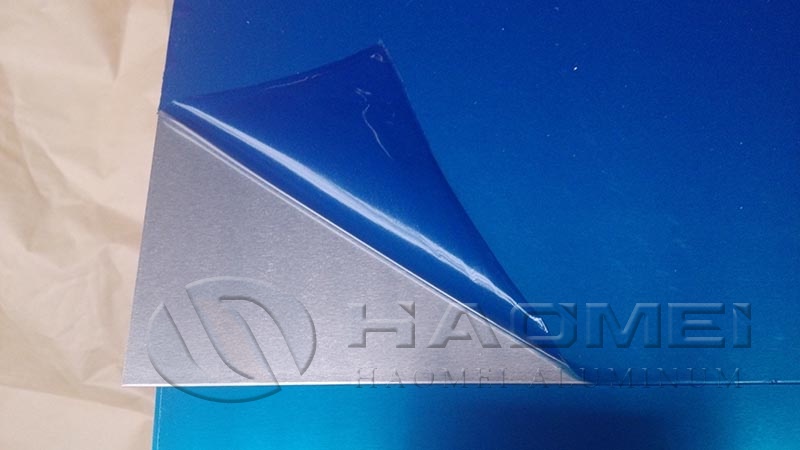
Ask the supplier for clear information on surface quality, flatness, edge condition, protective film availability, and intended plate orientation where forming is important. Tanker components with deep pressing, tight-radius bending, or dished-end forming may require a softer temper or trial forming before volume production.
For each purchase lot, verify these checkpoints:
- Material test certificate and traceable heat number.
- Actual thickness and dimensional tolerances.
- Tensile property range for the ordered thickness.
- Surface condition free from deep scratches, embedded particles, and oil contamination.
- Ultrasonic inspection requirements for critical plate, if specified by the design.
- Packaging that prevents edge damage and water accumulation during transport and storage.
5754 H14 is a useful aluminum tanker plate option when its temper, welded condition, corrosion exposure, and structural role are evaluated as one engineering decision rather than as separate purchasing details.